A read-aloud story · 5 min
The Swallow Who Didn’t Want to Go
Early readers · Richer words and bigger questions — great to read together. About 5 minutes.
Hands full? Auto-scroll is under Aa. Listen is part of Stories Nest Pro.
All through the barn, swallows fizzed with excitement. They polished their beaks. They tested their wings. They argued cheerfully about whether the southern insects tasted better. Above them, the old tin roof shone burnished gold where the dawn slipped through one particular crack. Tomorrow, the flock would fly.
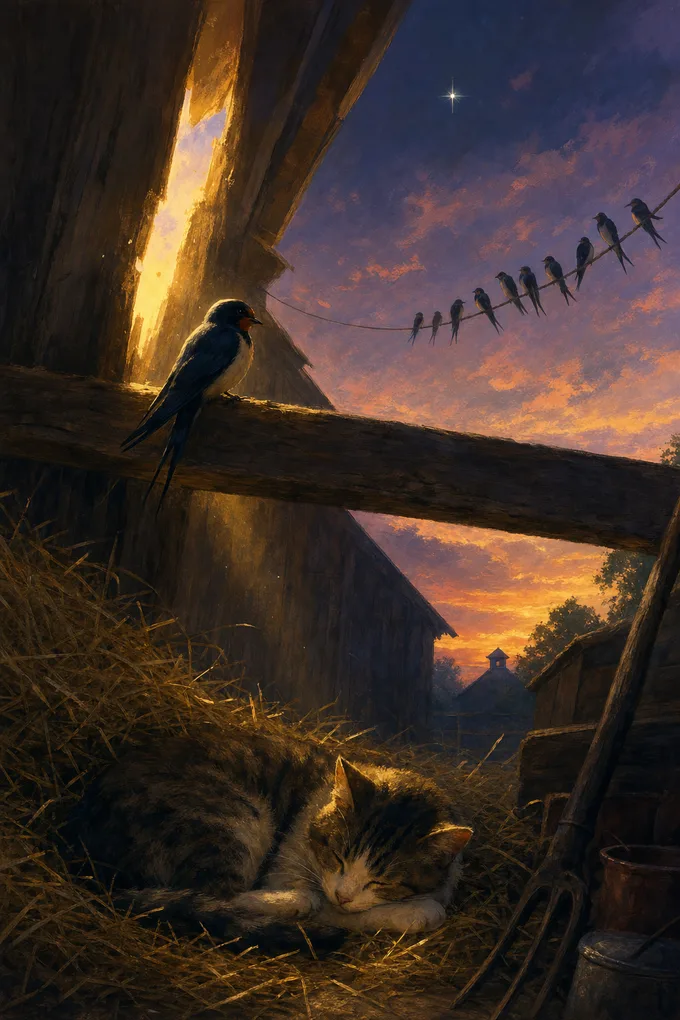
Sorrel did not fizz. She sat on her beam and pressed both feet around its familiar splinter. She liked this beam. She liked the hay-smell rising from below and the silver susurrus of rain on the roof. Most of all, she liked being exactly here, while everybody else talked about there.
“I’m not going,” Sorrel announced. Her voice came out smaller than she had planned. Below, Dumpling opened one eye. He was a round barn cat who never chased swallows and considered most exercise an unfortunate rumor. Sorrel waited for someone to say she could stay, but the barn gave no answer.
Ash, her grandmother, landed beside her. She did not say that Sorrel was being silly, because Sorrel’s toes were gripping hard enough to hurt. She only looked toward the open door. The days were cooling. Soon the insects would vanish, and the long flight could not wait. Sorrel’s chest tightened as the truth came in.
It wasn’t fair that loving a place did not make winter negotiate. A hot prickle of frustration climbed Sorrel’s neck. She flew down to the hayloft, then up to the rafters, then around the hanging lantern, fast enough to stir the dust. If she could not stay, she decided, she would pack. The trouble was, swallows had no pockets.
So Sorrel packed the barn another way. First, she watched the dawn crack until its pale blade of light felt printed behind her eyes. Second, she listened as rain began. Tap. Tip-tip. Tap. She tucked the rhythm into her breathing. Third, she dropped beside Dumpling and leaned against his velvet ear. He purred like a tiny, badly tuned tractor. Three things to carry, and one goodbye left.
“Thank you for never chasing me,” Sorrel told him. Dumpling blinked slowly, which might have meant “You’re welcome,” or possibly “Please move, you’re sitting on my whisker.” Then Sorrel returned to the beam. Ash touched her wing and said, “When the strange roof makes you feel small, look up. Same star. Different roof.”
Morning arrived too quickly. The swallows streamed from the barn in loops and ribbons, calling across the cold blue air. Sorrel stayed on her beam. Her wings trembled against her sides. Outside waited fields she had never crossed, water wider than a hundred barns, and the dreadful possibility that her courage might fail halfway. At the doorway, Ash waited.
Sorrel looked once at the crack of light. She listened once to the rain’s last soft tap. She dipped toward Dumpling, who lifted a paw without quite committing to standing up. Then she flew to the doorway under her own wing power and perched there. The unknown looked enormous. Sorrel whispered, “Same star. Different roof.” Then she chose to go.
Whoosh. The air caught her. For one breath, Sorrel tumbled. For the next, she flapped too hard. On the third, her wings found their rhythm, quick and sure. The barn shrank beneath her until the roof was a gray square, then a glint, then part of the patchwork earth. Sorrel’s throat ached with sharp, precise homesickness. Still, she flew on. “Same star. Different roof.”
They crossed three green fields, a river twisting like loose ribbon, and hills that gathered blue at their edges. By evening, Sorrel was tired down to her tail feathers. The flock settled beneath the eaves of an unfamiliar shed. Its boards smelled different. Its roof made no promise about rain. Sorrel tucked her head low, listening to the hush.
Then she noticed a narrow crack above the beam. Through it, one star appeared. It belonged to the same constellation she had watched from the barn, bright and steady over this strange roof. Sorrel could still hear tap, tip-tip, tap inside her breathing. She could still feel one velvet ear against her side.
Her toes loosened around the new beam. The night grew soft. Sorrel looked up and whispered, “Same star. Different roof.”
Talk about it
This story quietly practices the courage to leave what is loved and the gratitude that helps children notice what travels with them.
What would you choose to remember if you were leaving a place you loved?
Where do you feel brave in your body when you try something new?
What familiar thing might help you feel settled in a new place?
One more? Try a five-minute puppet show, or pick another story below.